
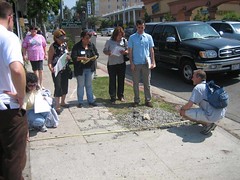
Following the success of the Hollywood Walkabout last year, I joined community members and urban planners alike for the Glassell Park and Cypress Park Walkabout, the first step in identifying opportunities to improve walkability and create a community-centered design plan for these two neighborhoods. We measured sidewalks, surveyed the different types of development in the community, and began identifying beautification measures, both within the community and sections that connect to the LA River Master Plan.
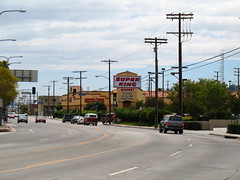
First among the 14 points identified in the Planning Department’s DO REAL PLANNING agenda is Demand Walkability, and communities such as Hollywood and Glassell Park are getting in on the act by bringing neighbors and planners together to discuss their vision for the future of their area. (And some parts of the area are much more walkable than the part in the picture above--though that is all too typical of Los Angeles's commercial corridors.) The Walkabout was a great first step towards a sustainable, community based vision for the future of Glassell and Cypress Park.
Photo from Luis Lopez's flickr stream
Showing posts with label do real planning. Show all posts
Showing posts with label do real planning. Show all posts
Thursday, June 21, 2007
Tuesday, June 12, 2007
LABJ, LA Weekly, KCRW Do Real Planning
The conversation about the future of our cityscape that I joined with my Do Real Planning series continues to gather steam.
The Los Angeles Business Journal printed an opinion piece (free registration required) that I wrote about how recent developments in Hollywood crystallize the points laid out in the Planning Department's manifesto (.pdf version available here).
The LA Weekly recently published a provocative cover story arguing, among other things, that the term "smart growth" is being used to cover for the same old "dumb growth" that our city can't afford to keep seeing.
I went on KCRW's Which Way L.A. to discuss growth, planning, and transportation with David Zahniser from the L.A. Weekly, as well as developer Bill Witte and transit-using author Alissa Walker. Curbed L.A. took copious notes. ("Trojan horse", guys.)
Friday, May 25, 2007
Do Real Planning #14: Give Project Input Early
The Los Angeles City Planning Commission has unveiled a 14-point policy agenda (.pdf link) to set the city on a course towards sustainability, using Planning Director Gail Goldberg’s mantra of “DO REAL PLANNING” as an acronym for the platform. This entry concludes my point-by-point evaluation of each of these planning principles through the lens of my own district work and the potential for citywide direction along these lines.
Predictability in the process is essential. By sharing the new “rules of the road” as we develop them together with the Planning Commission and the mayor, I'm trying to do my small part. I've also pushed for our updates to the community plan, such as that underway in Hollywood, to give predictable, transparent, and straightforward planning guidelines that help our planning bureaucracy communicate clearly with developers and stakeholders. The closer that new development proposals adhere to the thirteen previous principles above, the smoother the process will be. And the stronger our interconnected and urban 21st-century city will become.
Read all 14 DO REAL PLANNING posts here.
Tuesday, May 22, 2007
Do Real Planning #13: Narrow Road Widenings
The walkability of urban streets is directly related to the linear foot allocation between roadway and sidewalk. My office consistently supports the pedestrian realm, not only by planning ahead (see our walkabouts referenced in "Demand a Walkable City") but also by emphasizing pedestrian-based design and scale in our neighborhoods. In Atwater Village, the Pedestrian-Oriented District is an unqualified success along Glendale Boulevard.
Monday, May 21, 2007
Do Real Planning #12: Identify Smart Parking Requirements
The Los Angeles City Planning Commission has unveiled a 14-point policy agenda to set the city on a course towards sustainability, using Planning Director Gail Goldberg's mantra of "DO REAL PLANNING" as an acronym for the platform. In many ways, CD13 has already begun to do land use work with these principles in mind, in ways that I hope can help set a citywide standard.
I'm very excited about the parking code revisions that have been endorsed recently by the Planning Commission. These wide-ranging revisions address parking stall widths, allow tandem parking, support robotic parking solutions and permit parking on permeable surfaces. (Parking as demonstrated in the illustration is still not recommended.)
A small revolution is underway--and where better than in Los Angeles, where parking has aspired to art? My office has convened businesses, city departments, neighborhood councils, and others to develop a parking management district in Hollywood to better manage the inventory of public and private spaces that exist. Combined with a district-wide valet, neighborhood circulators like the Holly Trolley and shared use spaces that are close to transit, we are showing how we can accommodate cars while expanding more transportation options for getting to and around the neighborhood.

I'm very excited about the parking code revisions that have been endorsed recently by the Planning Commission. These wide-ranging revisions address parking stall widths, allow tandem parking, support robotic parking solutions and permit parking on permeable surfaces. (Parking as demonstrated in the illustration is still not recommended.)
A small revolution is underway--and where better than in Los Angeles, where parking has aspired to art? My office has convened businesses, city departments, neighborhood councils, and others to develop a parking management district in Hollywood to better manage the inventory of public and private spaces that exist. Combined with a district-wide valet, neighborhood circulators like the Holly Trolley and shared use spaces that are close to transit, we are showing how we can accommodate cars while expanding more transportation options for getting to and around the neighborhood.
Sunday, May 20, 2007
Do Real Planning #11: Nurture Planning Leadership
My indispensable friends over at Curbed LA (better than a cup of coffee in the morning for all you land-use types) interpreted this principle as a veiled entreaty to get City Council staff out of the way of planning decisions. I didn’t read it in exactly the same way.
Stakeholders in a democracy demand and depend on their voices being heard in the planning process. And this does not just mean NIMBY voices: council offices, neighborhood councils and non-profit groups are critical to positive, proactive and community-based planning.
In an era of term limits, though, the predictability of meaningful community plans becomes evident. I strongly support the Planning Director’s efforts to reclaim the role of predominant manager of the General Plan. This will rely on the strength of the General Plan revision itself, which must be done in community-focused and neighborhood-specific fashion. Right now, planning and zoning is often highly unpredictable—to the community, to builders, and to urban planners alike. It's based on a speculative land market which in turn rests on the discretionary actions of the system, rather than on adherence to well-thought-out community plans. Of course, adherence to the plan requires the plan to get regular, thorough updates.
I'm committed to helping the department get the resources to do these in a timely fashion and to have staff it needs to help these plans get implemented. I've shared the frustration of many members of the Hollywood community who have waited years for the update to the Hollywood Community Plan, for instance. This effort is now on track. We hope it can be a showcase for a Planning Department that serves the primary implementer of a community-driven plan.
Friday, May 18, 2007
Do Real Planning #10: Neutralize Mansionization

The Los Angeles City Planning Commission has unveiled a 14-point policy agenda to set the city on a course towards sustainability, using Planning Director Gail Goldberg's mantra of "DO REAL PLANNING" as an acronym for the platform. I am blogging each of these planning principles through the lens of my own district work, and I hope that the real-life examples from CD13 can help set citywide direction along these lines.
Many neighborhoods throughout Los Angeles struggle to protect and preserve their unique character. I have supported the creation and expansion of Historic Preservation Overlay Zones in Echo Park. I also support the Planning Department's efforts to create a citywide building-envelope regulation to address mansionization. CD13 has been mostly spared the onslaught of mansionization, the tearing down of existing homes to build much larger ones on the same lot. Nonetheless, we need to protect the unique and historical character and scale of our district's neighborhoods.
Wednesday, May 16, 2007
Do Real Planning #9: Arrest Visual Blight
Last week, the Los Angeles City Planning Commission unveiled a 14-point policy agenda to set the city on a course towards sustainability, using Planning Director Gail Goldberg's mantra of "DO REAL PLANNING" as an acronym for the platform. I am looking at each of these planning principles through the lens of my work in my own district and the potential for citywide direction along these lines.
While commercial signage has been a strong element in business districts throughout the country, the city continues to struggle to address the proliferation of illegal and unpermitted signs and supergraphics. In my district, I am working to secure funds to staff a permanent enforcement team that can focus on sign enforcement in the downtown Hollywood area, where for every illegal sign we get taken down, there seem to be two or three more popping up. I am also looking at legislation to increase fines for violating these laws and closing loopholes that allow "temporary" signs to be put up in a semi-permanent manner.
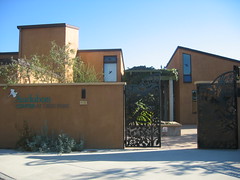
Note: the blog's not reliably kept the Flickr credit on these posts, where I've used public photos. I've recently used shots by birdw0rks (of a green roof), Atwater Village Newbie (of the fire), and [fq9] (of the green-built Audubon Center at Debs Park.
Monday, May 14, 2007
Principle #8: Landscape in Abundance
Recently, the Los Angeles City Planning Commission unveiled a 14-point policy agenda to set the city on a course towards sustainability, using Planning Director Gail Goldberg's mantra-DO REAL PLANNING as an acronym for the platform. On this blog, I am using this blog to share my thoughts on each of these planning principles through the lens of my own district work and the potential for citywide direction along these lines.
During my first term in office, I successfully advocated for revisions in the city's landscape ordinance to encourage greening and water conservation and championed the expansion of the native tree protection ordinance. Private development can play a critical role in the greening of our city as well. We need to give specific incentives to buildings that incorporate more abundant landscaping. I am also working closely with my colleague Councilmember Ed Reyes to promote more green roofs atop our buildings. We hosted a green roofs symposium recently towards this end. Lastly, buildings that have vibrant and responsible landscaping receive points toward LEED certification and priority plan checks with the Planning Department.

During my first term in office, I successfully advocated for revisions in the city's landscape ordinance to encourage greening and water conservation and championed the expansion of the native tree protection ordinance. Private development can play a critical role in the greening of our city as well. We need to give specific incentives to buildings that incorporate more abundant landscaping. I am also working closely with my colleague Councilmember Ed Reyes to promote more green roofs atop our buildings. We hosted a green roofs symposium recently towards this end. Lastly, buildings that have vibrant and responsible landscaping receive points toward LEED certification and priority plan checks with the Planning Department.
Tuesday, May 08, 2007
Principle #7: Produce Green Buildings
Recently, the Los Angeles City Planning Commission unveiled a 14-point policy agenda to set the city on a course towards sustainability, using Planning Director Gail Goldberg's mantra-DO REAL PLANNING as an acronym for the platform. Each day, on this blog, I am using this blog to share my thoughts on each of these planning principles through the lens of my own district work and the potential for citywide direction along these lines.
Buildings consume 36% of total energy use in the United States, account for 30% of greenhouse gas emissions, 30% of raw materials yes, and 12% of water consumption across the country. Building green is for more than just a few eco-friendly home owners scattered throughout the country. It is an integral part of sustainable living in an urban environment.
Last year, I authored the legislation that gives priority plan check handling to any buildings that meet the Leadership in Energy and Environmental Design (LEED) Silver certification standard for green building. A few years earlier, I wrote the nation's largest statute requiring all city buildings to be built to LEED standards. Now, my staff is working with the Planning Department to craft a sustainability baseline for building in Los Angeles, along with an incentive program for buildings that employ higher sustainability measures. I have encouraged several builders to pursue LEED certification and I am hopeful that the first LEED Platinum commercial building in Los Angeles will be completed in my district.
Last Sunday's Steve Lopez article chronicling Delilah's Bakery's journey through the city bureaucracy, nicely illustrating point #4 of the DO REAL PLANNING agenda. Delilah's story is familiar to many small businesses in Los Angeles. With the assistance of our Echo Park Field Deputy, Kabira Stokes, Delilah's was able to navigate through the various requirements and begin serving their delicious red velvet cupcakes. It should not take the individual case management of a council office for entrepreneurs to get through this system - the constituent-oriented service that Kabira provided for Delilah's should be standard operations for city departments. DO REAL PLANNING helps to get us to a point where every business feels like they get "small-town help in a big city."
Buildings consume 36% of total energy use in the United States, account for 30% of greenhouse gas emissions, 30% of raw materials yes, and 12% of water consumption across the country. Building green is for more than just a few eco-friendly home owners scattered throughout the country. It is an integral part of sustainable living in an urban environment.
Last year, I authored the legislation that gives priority plan check handling to any buildings that meet the Leadership in Energy and Environmental Design (LEED) Silver certification standard for green building. A few years earlier, I wrote the nation's largest statute requiring all city buildings to be built to LEED standards. Now, my staff is working with the Planning Department to craft a sustainability baseline for building in Los Angeles, along with an incentive program for buildings that employ higher sustainability measures. I have encouraged several builders to pursue LEED certification and I am hopeful that the first LEED Platinum commercial building in Los Angeles will be completed in my district.
Last Sunday's Steve Lopez article chronicling Delilah's Bakery's journey through the city bureaucracy, nicely illustrating point #4 of the DO REAL PLANNING agenda. Delilah's story is familiar to many small businesses in Los Angeles. With the assistance of our Echo Park Field Deputy, Kabira Stokes, Delilah's was able to navigate through the various requirements and begin serving their delicious red velvet cupcakes. It should not take the individual case management of a council office for entrepreneurs to get through this system - the constituent-oriented service that Kabira provided for Delilah's should be standard operations for city departments. DO REAL PLANNING helps to get us to a point where every business feels like they get "small-town help in a big city."
Friday, May 04, 2007
Principle #6: Locate Jobs Near Housing
Last week, the Los Angeles City Planning Commission unveiled a 14-point policy agenda to set the city on a course towards sustainability, using Planning Director Gail Goldberg's mantra--DO REAL PLANNING--as an acronym for the platform. Each day, on this blog, I am sharing my thoughts on each of these planning principles through the lens of my own district work and the potential for citywide direction along these lines.
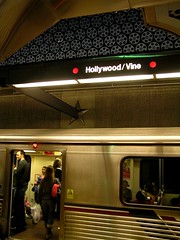
One of the reasons that Los Angeles spends more time in traffic than any other American city is because we stopped locating jobs near housing, and vice-versa. Many communities that have seen significant job growth have not witnessed a similar rise in housing. One of the best ways to reduce traffic is to build mixed-use communities, where people can live, work, and play in a localized area. I have strongly supported the mixed-use boulevard designation for transit corridors in my district and introduced legislation allowing mixed use projects that incorporate retail, commercial, and residential spaces in regional centers like Hollywood. The development at Hollywood and Vine is a great example of this mix, with housing for residents of all income levels located near jobs atop a subway stop. Imagine how much less traffic we would have if we could all walk or use public transit to get to work near where we live, shop, eat, and play.
Thursday, May 03, 2007
Do Real Planning #5: Advance Homes for Every Income
The Los Angeles City Planning Commission has unveiled a 14-point policy agenda to set the city on a course towards sustainability, using Planning Director Gail Goldberg's mantra of DO REAL PLANNING as an acronym for the platform. Each day, on this blog, I am sharing my thoughts on each of these planning principles through the lens of my own district work and the potential for citywide direction along these lines.
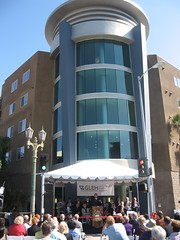
The 13th Council District is home to people at all income levels, and I am deeply committed to catalyzing housing production for all the diverse communities in the district. My office has consistently gone to bat for new, well-designed residential development. At the same time, developers seeking zone changes in Hollywood have volunteered affordable housing units as public benefits for the working families that live in our city. To achieve more homeownership opportunities for our residents, I have encouraged the use of the Small Lot Subdivision Ordinance, and several projects in my district are beginning to demonstrate that for-sale housing can be built more affordably. I continue to work with the Mayor and my colleagues to ensure that the Affordable Housing Trust Fund is fully funded. With housing prices in the urban core continuing to rise or maintaining their unaffordable heights, the expansion of affordable rental housing and homeownership will require efforts from all neighborhoods across Los Angeles to house our city.
The 13th Council District is home to people at all income levels, and I am deeply committed to catalyzing housing production for all the diverse communities in the district. My office has consistently gone to bat for new, well-designed residential development. At the same time, developers seeking zone changes in Hollywood have volunteered affordable housing units as public benefits for the working families that live in our city. To achieve more homeownership opportunities for our residents, I have encouraged the use of the Small Lot Subdivision Ordinance, and several projects in my district are beginning to demonstrate that for-sale housing can be built more affordably. I continue to work with the Mayor and my colleagues to ensure that the Affordable Housing Trust Fund is fully funded. With housing prices in the urban core continuing to rise or maintaining their unaffordable heights, the expansion of affordable rental housing and homeownership will require efforts from all neighborhoods across Los Angeles to house our city.
Tuesday, May 01, 2007
Do Real Planning #4: Eliminate Department Bottlenecks
Last week, the Los Angeles City Planning Commission unveiled a 14-point policy agenda to set the city on a course towards sustainability, using Planning Director Gail Goldberg's mantra of DO REAL PLANNING as an acronym for the platform. Each day, on this blog, I am sharing my thoughts on each of these planning principles through the lens of my own district work and the potential for citywide direction along these lines.
Since I was elected in 2001, I have met with homeowners, developers, and community members frustrated by how long it takes to navigate through the city's red tape on projects that have already been approved by the community and the city. Good developments hesitate to come to Los Angeles because developers fear how long it might take to win approvals and commence construction in our city.
As a member of the City Council Budget and Finance Committee, I pushed for additional staffing, located in the Planning Department and in other development-related departments, to help expedite community planning requests and to expedite projects. We've won many new hires, but we must do more. Gail Goldberg's strategic plan promises to reorganize and reinvigorate the Planning Department. I will do everything in my power to ensure that the department gets all the resources it needs in this years budget, and subsequent budgets, to reform the city’s development process and increase housing and commercial production.
Friday, April 27, 2007
Do Real Planning #3: Require Density Around Transit
Last week, the Los Angeles City Planning Commission unveiled a 14-point policy agenda to set the city on a course towards sustainability, using Planning Director Gail Goldberg's mantra of DO REAL PLANNING as an acronym for the platform. I'm blogging my own thoughts on each of these planning principles through the lens of my own district work and the potential for citywide direction along these lines.
Council District 13 is blessed with a transit infrastructure that is the envy of the city. We have more subway stops, rapid bus lines, and bike lanes than in any other part of town. We have the most used DASH line in the city and the most pedestrian-oriented business districts. So taking advantage of our main streets to help reduce traffic and increasing the quality of life by putting density near transit is a true no-brainer.
A few years ago, the community in Hollywood helped write the Station Neighborhood Area Plan (SNAP), to encourage the right kind of development near all of our Red Line Stations and adjacent neighborhoods. In the next 5 years, you will see a dramatic change in Hollywood at the Red Line intersection of Hollywood and Vine, where dense, urban projects will rise above a corner that has not until recently lived up to its famous name. That resurgence will mirror the revitalization of the Hollywood and Western intersection, where we moved our field office over a year ago to take advantage of the subway stop. In central Hollywood, several thousand housing units are coming on line that can move people closer to where they work or allow them to use public transit to get there.
In Hollywood today, you can commute to work downtown on the subway, walk to a great restaurant, stroll down to the world-famous Hollywood Farmer's Market, or catch a movie or a play all without getting into a car. That means more time to enjoy our city and the company of our families and friends.
Council District 13 is blessed with a transit infrastructure that is the envy of the city. We have more subway stops, rapid bus lines, and bike lanes than in any other part of town. We have the most used DASH line in the city and the most pedestrian-oriented business districts. So taking advantage of our main streets to help reduce traffic and increasing the quality of life by putting density near transit is a true no-brainer.
A few years ago, the community in Hollywood helped write the Station Neighborhood Area Plan (SNAP), to encourage the right kind of development near all of our Red Line Stations and adjacent neighborhoods. In the next 5 years, you will see a dramatic change in Hollywood at the Red Line intersection of Hollywood and Vine, where dense, urban projects will rise above a corner that has not until recently lived up to its famous name. That resurgence will mirror the revitalization of the Hollywood and Western intersection, where we moved our field office over a year ago to take advantage of the subway stop. In central Hollywood, several thousand housing units are coming on line that can move people closer to where they work or allow them to use public transit to get there.
In Hollywood today, you can commute to work downtown on the subway, walk to a great restaurant, stroll down to the world-famous Hollywood Farmer's Market, or catch a movie or a play all without getting into a car. That means more time to enjoy our city and the company of our families and friends.
Thursday, April 26, 2007
Do Real Planning #2: Offer Basic Design Standards
Last week, the Los Angeles City Planning Commission unveiled a 14-point policy agenda to set the city on a course towards sustainability, using Planning Director Gail Goldberg's mantra, “DO REAL PLANNING”, as an acronym for the platform. Here at CD13.com, I am sharing my thoughts on each of these planning principles, using the lens of my own district work and the potential for citywide direction along these lines.
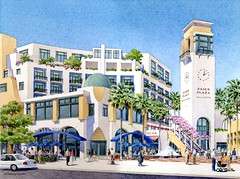
Principle #2: OFFER BASIC DESIGN STANDARDS
Because our plans historically have not included formal design guidelines, I have been blessed with more than a dozen architects, historical preservationists, and designers from the community, who volunteer several hours a month to participate in our Hollywood Design Review Committee. I can't underscore enough how critically important this has been in raising the bar for our major developments in Hollywood.
I am encouraged that the Los Angeles chapter of the American Institute of Architects is developing a workshop for communities on design principles that will help elevate design issues in all Los Angeles neighborhoods and I am working with them to bring the Los Angeles Unified School District, local chambers, and other governmental entities together to ensure that good design can be more unified in our neighborhoods, no matter who is building in our city.
Too often, good design has been missing from our local developments, but neighborhood councils, community groups, and council offices have the potential to bring all stakeholders in any given community together to make Los Angeles as beautiful as it can be.
Principle #2: OFFER BASIC DESIGN STANDARDS
Because our plans historically have not included formal design guidelines, I have been blessed with more than a dozen architects, historical preservationists, and designers from the community, who volunteer several hours a month to participate in our Hollywood Design Review Committee. I can't underscore enough how critically important this has been in raising the bar for our major developments in Hollywood.
I am encouraged that the Los Angeles chapter of the American Institute of Architects is developing a workshop for communities on design principles that will help elevate design issues in all Los Angeles neighborhoods and I am working with them to bring the Los Angeles Unified School District, local chambers, and other governmental entities together to ensure that good design can be more unified in our neighborhoods, no matter who is building in our city.
Too often, good design has been missing from our local developments, but neighborhood councils, community groups, and council offices have the potential to bring all stakeholders in any given community together to make Los Angeles as beautiful as it can be.
Do Real Planning #1.5
Via Curbed LA, a Planning Report interview with Emily Gabel Luddy, head of the city Planning Department's Urban Design Studio. She states that "the civic discussion about the central role that urban design plays in this city is coming together at the right time." I couldn't agree more.
Tuesday, April 24, 2007
Do Real Planning #1: Demand a Walkable City
Last week, the Los Angeles City Planning Commission unveiled a 14-point policy agenda to set the city on a course towards sustainability, using Planning Director Gail Goldberg’s mantra-“DO REAL PLANNING” as an acronym for the platform.
I am encouraged by the Commission's passion and commitment to city-building. Their agenda speaks to me and to the work that my office has been doing in the Thirteenth Council District during my tenure.
Over the next two weeks, I will write on this blog about my thoughts on each of these planning principles through the lens of my own district work and the potential for citywide direction along these lines.
The first principle is DEMAND A WALKABLE CITY. This principle may seem like an anathema to our car-oriented city, but Los Angeles has always been a great city for walking, and as we have filled in our sprawling spaces, this has become more and more apparent. I walk in my own neighborhood of Echo Park a few days a week. We are blessed with parks, a great lake, parks, and a central business district that are all interesting to and convenient for pedestrians.
One of the ways we have been trying to make all of the streets of our council district friendly to pedestrians is by organizing walkabouts. Our first, the Great Hollywood Walkabout, was an event I hosted last year to engage the community in a discussion about the pedestrian experience in Hollywood. More than one hundred volunteers joined me on a Saturday in June to walk the streets of Hollywood armed with tape measures, cameras, and a careful eye with which to survey our street and sidewalk conditions. This information has helped influence the work that we are doing to update the Hollywood Community Plan to ensure that city-wide street standards are not applied to our existing street grid to unnecessarily widen streets and narrow sidewalks.
Our report on the Great Hollywood Walkabout is here (pdf). Read it and possibly be inspired to do the same ... especially if you are in Northeast L.A. For on Saturday June 9th, we are having the Great Glassell Park and Cypress Park Walkabout. Come join us!
I am encouraged by the Commission's passion and commitment to city-building. Their agenda speaks to me and to the work that my office has been doing in the Thirteenth Council District during my tenure.
Over the next two weeks, I will write on this blog about my thoughts on each of these planning principles through the lens of my own district work and the potential for citywide direction along these lines.
The first principle is DEMAND A WALKABLE CITY. This principle may seem like an anathema to our car-oriented city, but Los Angeles has always been a great city for walking, and as we have filled in our sprawling spaces, this has become more and more apparent. I walk in my own neighborhood of Echo Park a few days a week. We are blessed with parks, a great lake, parks, and a central business district that are all interesting to and convenient for pedestrians.
One of the ways we have been trying to make all of the streets of our council district friendly to pedestrians is by organizing walkabouts. Our first, the Great Hollywood Walkabout, was an event I hosted last year to engage the community in a discussion about the pedestrian experience in Hollywood. More than one hundred volunteers joined me on a Saturday in June to walk the streets of Hollywood armed with tape measures, cameras, and a careful eye with which to survey our street and sidewalk conditions. This information has helped influence the work that we are doing to update the Hollywood Community Plan to ensure that city-wide street standards are not applied to our existing street grid to unnecessarily widen streets and narrow sidewalks.
Our report on the Great Hollywood Walkabout is here (pdf). Read it and possibly be inspired to do the same ... especially if you are in Northeast L.A. For on Saturday June 9th, we are having the Great Glassell Park and Cypress Park Walkabout. Come join us!
Subscribe to:
Posts (Atom)